Overview
This is a solo explainer episode from the ColdFusion channel, hosted by Dagogo Altraide, examining the financial structure and investment implications of the SpaceX IPO. The episode argues that SpaceX's public listing is misleading: the company's own regulatory filings reveal that 85% of its stated addressable market is AI, not space or satellite communications, primarily because of its merger with Elon Musk's AI company, xAI.
Bottom Line
The episode offers a focused, data-grounded critique of how SpaceX positioned itself for public markets, drawing on its S-1 filing, revenue figures, and the xAI merger. It requires moderate attention and covers specific financial details rather than broad speculation. It will be most useful to people considering exposure to SpaceX stock or trying to understand how the AI investment boom is shaping corporate behaviour.
Key Themes
- SpaceX's S-1 filing classifies it as an AI company
- The xAI merger and its financial impact
- SpaceX's attempt to fast-track into the S&P 500
- xAI's competitive position in the LLM market
- The orbital data centre proposal and its risks
- Signs of an overheated AI investment market
What Was Discussed
What SpaceX's own filings say When SpaceX filed its S-1 documents ahead of its IPO, it listed its industry code as 7370 — computer programming and data processing — rather than any aerospace or defence category. Its stated total addressable market is $28.5 trillion, of which only 15% is attributed to space and communications. The remaining 85% is AI. The episode argues this is a fundamental mismatch between how the company is publicly perceived and how it has legally defined itself to investors.
The xAI merger and its consequences In February 2026, SpaceX merged with xAI, Musk's AI venture. Prior to the merger, SpaceX had posted a net income of approximately $791 million in 2024 and was considered financially healthy for an aerospace company. After the merger, retrospective accounting produced a net loss of $5 billion for 2025, on revenues of $18 billion. xAI was losing roughly $28 million per day in 2025, with capital expenditure accelerating sharply — $7.7 billion in Q1 2026 alone. SpaceX's own capex rose from 42% of revenue to 215% of revenue following the merger.
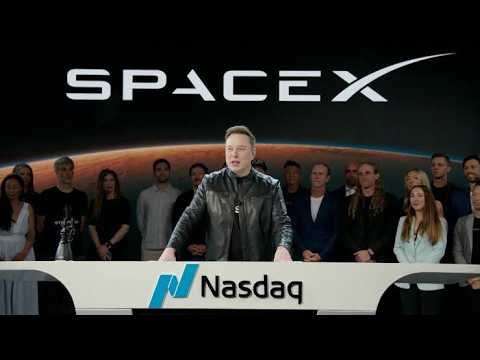
The S&P 500 rejection and NASDAQ inclusion SpaceX attempted to fast-track inclusion in the S&P 500, which would have automatically directed an estimated $14 billion in passive fund flows — from 401(k)s, pension funds, and international investment vehicles — into the stock. The S&P 500 committee declined, citing SpaceX's failure to meet profitability requirements across four consecutive quarters. The NASDAQ accepted the listing, meaning some passive fund exposure will still occur.
xAI's market position and management The episode examines xAI's competitive standing. Its chatbot, Grok, reportedly holds approximately 0.4% of enterprise AI usage. All 11 of xAI's original co-founders have left the company. A data centre built for AI training was reportedly designed with three incompatible GPU types, resulting in training running at 11% of capacity. This facility was subsequently rented to Anthropic rather than used internally.
The orbital data centre plan SpaceX has filed with the FCC to launch up to one million satellites to create a space-based AI compute network, with operations targeted to begin by 2028. The episode raises several concerns: rapid obsolescence of GPU hardware, the challenges of heat dissipation in a vacuum, radiation damage from cosmic rays and solar events, and the sheer scale of orbital debris risk. The Starlink network currently operates around 9,000 satellites.
Notable Points
The "Trojan horse" framing. The episode argues that the structure of the S-1 prospectus buries the financial reality: investors must scroll through 11 pages of rocket content before reaching disclosures that reveal the company's core bet is on AI. The claim is that xAI is effectively being floated using SpaceX's brand reputation as cover.
The Google compute deal. Google signed an agreement to lease GPU compute from xAI for $920 million a month. The episode notes that either party can exit with 90 days' notice, and that Google holds a 6% stake in xAI — raising the question of whether the deal is genuine revenue or a form of circular financing timed to the IPO.
Starlink as the one genuine profit centre. The Starlink satellite internet service generated $11.4 billion in revenue and $4.4 billion in operating profit in 2025. The episode argues this was a strong, competition-free business that could have supported a straightforward IPO on its own merits, without the AI repositioning.
The IPO scale. At launch, SpaceX reached a valuation of $2.3 trillion, described in the episode as the largest IPO in financial market history — exceeding Amazon, Google, Alibaba, and Saudi Aramco. It instantly became the seventh most valuable company globally.
Worth Listening If…
- You are considering investing in SpaceX and want to understand what the S-1 filing actually says before committing.
- You're following the broader trend of AI companies using mergers or rebranding to access public capital markets.
- You're interested in the practical and financial viability of orbital infrastructure as a serious technology proposal.
- You want a concise account of how the xAI merger changed SpaceX's financial profile.
Skip If…
- You're looking for a balanced debate or counterarguments in favour of the SpaceX investment case — the episode is explicitly critical throughout.
- You want in-depth technical coverage of SpaceX's rocket programme or Starlink's engineering; those topics receive minimal attention here.